Yeah, we're done here, you clearly have no idea how anything works from a technical standpoint seeing as you think 8-bit hardware can't run games at 60fps. Go read up on shift registers and how the PPU and VDP actually function.
An 8bit console like GBC MAYBE CAN run shit at 60fps, but do not expect a FULL commercial GAME with lots of sprites to move. Maybe a snake game programmed in assembler.
Also that comment wasn't about Power Strike 2, it was about Project S-11. The video that was right above the comment in question.
Ok. I don't even known about that GBC game.
Obviously is way worse than Power Strike II for GG, so... what's your point there? GBC got a mediocre SHMUP? well..., yes.
Also, yes, SHMUPS were dead.
NO
Let me ask you one question.
What do you understand as Shoot 'em up?
because,
it is LITERALLY CRAZY to say, in mid-late 90s, they were a dead genre.
C_R_A_Z_Y
Did you know, can you EVEN put Star Fox 64 (1997) there? a BIG name in the catalog of N64.
Do you understand that?
And "Sin and Punishment", from late 2000, is also a shoot em up: That game was famous even when was never released in the west... until the Virtual Console for Wii.
The fact they are in 3D
does not mean they are not shoot em ups.
Because, those 2 games ARE shoot 'em ups, and you can find them in almost ALL the "N64 better games lists". Both games very remembered.
Let's see other consoles:
PSX is FULL of BIG names in shoot 'em ups:
Omega Boost
Einhander
Thunder Force V
R-Type Delta
RayStorm/Layer Section II
RayCrisis
G Darius
Gunbird
Thunder Force V
Xevious 3D/G
In the Hunt
...
and a LOOOT lot more... it's just insane, you dig in the PSX catalog and you find more and more games.
Many (or almost all of them), appeared in the west between 1997-2000. Just when GBC was released.
Many more were only released in Japan, like "DoDonPachi", "Gradius Gaiden", or "Strikers 1945" and its sequel.
But, for sure some will teach better than me about great shoot 'em ups for PSX.
Plus, PSX also got remakes and nice compilations of maaany classic shoot 'em ups series, and I mean, a LOT of them: Parodius, 194x, Sonic Wings, Gradius/Salamander, TwinBee...
...
PSX is most possibly, better than Mega Drive in Shoot 'em ups, and those are BIG WORDS.
But Saturn (which in JAPAN is a BIG contender for the PSX in shoot 'em ups), ALSO got a LOT of shooters. MANY of the mentioned above for PSX, plus some FANTASTIC exclusives:
Battle Garegga
Panzer Dragoon
Panzer Dragoon Zwei
Radiant Silvergun
Cotton 2
Batsugun
Metal Black
... and more
Saturn also got exclusives classic ports of Space Harrier or Galaxy Force II, from Sega itself.
There are SO MANY shoot 'em ups in that console generation, you could say it is one of the most prolific genres during that era, and some of them are SO GOOD... it's just CRAZY to say "they were dead". Just because GBC got almost NONE.
We are not talking about
Ikaruga here.
Ikaruga was released in the west in mid 2003.
In mid 2003, we were in FULL Grand Theft Auto 3D series explosion.
Ikaruga was seen by 2003 as a niche product for a failing console.
Yes, by 2003, Shoot 'em ups were basically in full regression. But 2003 is NOT 1998. Like 1998 is not 1993... (in 1993 2D platforming games WERE the absolute KINGS. By 1998 they were residual in the domestic consoles, all of them pretending to be
2.5D platformers. In 2003? nobody wanted a 2D platformer in PS2, XBox or GC).
Ikaruga was an arcade from the very late 2001 in Japan, when shot 'em ups were living their very last push: The same era when
REZ was released.
Many things were changing by 2003: GTA series was having a huge impact in the 3D adventure games, Fighting games started to be less important and they were abandon the classic 1vs1 formula for a 3vs3 or even the Smash formula, JRPG market was starting to saturate after years of growing, Racing games abandoned the arcade formula to be or more "realistic" GT-like, or "street tunning" NFS-like games, and the Call of Duty near incoming era was preceded by the Medal of Honor games, redefining the FPS games. By then, the shoot 'em up era in the domestic consoles... was over.
People remember Ikaruga for that late release in the west, for being one of the last famous shoot 'em ups, and because it was an exclusive for Gamecube. It was a weird product in 2003.
BUT... what happened with the shoot 'em ups in GBA, in that same early-mid 2000 era, when Shoot 'em ups were in total regression in domestic consoles?
IT GOT A LOT OF PORTS of MANY CLASSIC shoot 'em ups of the 16 bit era.
OF COURSE
Because it could manage them well.
Shoot 'em ups were always popular in portable consoles. They were a nice genre for those kind of systems. Even in THAT era, continue to be some kind of popular as portable games.
If GBC did not have SHMUPS... it was, because the hard was too old and nobody was that interested in doing very demanding ports for that hard. Good shoot 'em ups are VERY demanding in an 8bit console. Nobody was interested.
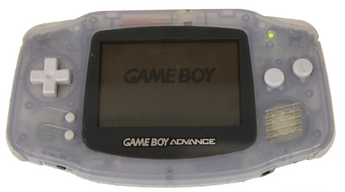
But when GBA appeared in 2001? was the perfect occasion to release many shot 'em ups from the 90s in a portable way.
And even new ones, like Iridion 3D.
When the next portable generation came... the 3D capabilities were so big, with many new possibilities in portable gaming... the genre was almost parked (although some nice games appeared in NDS, at least). That was about 2005.
BUT... pretending the Shoot 'em ups were a dead genre in late 90s Is just like saying: "bro, remember when after SNES, the RPGS almost disappeared?" Just because N64 got almost nothing of them... while PSX was giving a FEAST of them.
RPG didn't disappear, they just moved out from Nintendo.
N64 got almost NO RPGs, because the characteristics of the console make them very hard to be a real competition for the ones appearing in PSX and even Saturn: not many space in just one Cart with normally 16-32MB (and 64MB at max) for many pre-rendered graphics, videos, voices, or great music,
all considered basic features for a great RPG by then.
N64 was NOT the best platform for the RPGs of the era, so it got almost none.
GBC was not the best platform for fast and visually impressive Shot 'em ups... so it got almost none.
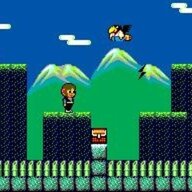
But what it GOT was a huge amount of "meh" 2D platformers,
when (Oh! the IRONY) that genre was dying by then. A genre which was moving lots of money... just few years before. 3D platforming/ 3D Adventures, Fighting games, Driving games, RPGs, 3D Sport games... all of them were much more popular than 2D platformers in late 90s.
Even 2D platformers tried to sell themselves as
2.5D in the domestic consoles. Even when they were just 2D games.
But... GBC got a LOT of them. GBC got A LOT of 2D platformers.
Why? cause the console old characteristics adapted very well to them. See what I'm telling you?
BETTER than the fast and demanding shoot 'em ups, for sure.
So, a real dying genre (2D platformers) was exploding in GBC, and a NOT dying genre (shoot 'em ups) was not present at all.
Meanwhile, with some talent, you
can do graphic tricks in racing games to make children believe there were cool 3D games. But they are not. They are just graphic tricks, which can be very useful in racing games or some 2D platforming special zones.
How many First Person Shooters you got in GBC? none.
GB classic got Faceball, and some nice 3D with that "X" game from Argonaut.
So probably GBC could get something better than that, but nobody was interested in trying it,
because GBC was so old tech by then.
Why you would try those kind of things in a GBC, in 1999 or 2000... while the domestic consoles had impressive full textured 3D games (with all kinds of illumination tricks) as something usual by then?
Was too difficult... for too little.
That was not anymore like pretending to have 3D portable games when you had 16 bit consoles with not great 3D capabilities.
GBC was not thought by Nintendo as the "big new thing" in portables, but as a "Pokemon extender" phenomena, because pokemon exploded in 1996 in Japan, when GB was already 7 years old. So they put a new color screen to an equivalent GB hard, and boosted the same CPU to double speed... instead of releasing the "Atlantis project". They for sure did a lot of money going that way. THAT happened.
I think you are confused with the Shoot 'em ups, because in that era the "Media" ALMOST NEVER promoted any Shoot 'em up as a "a MUST HAVE" (as sometimes happened in the 16bits). But that does not mean the genre was dead. IT WAS NOT, AT ALL.
In the media, though, in those years, you always got the same sequel names in PSX: Tomb Raider, Resident Evil/Dino Crisis, Final Fantasy, Tekken, Grand Turismo, FIFA/Madden, always the same names... because
they were promoted a lot. So, they sold a lot. But Shoot 'em ups were always there, just in the second row, and sometimes, got BIG games like "Omega Boost" or "Star Fox 64". Or "Sin and Punishment". Or even "Rez" (possibly the latest big one).
After that, the PS2 predominance era changed many things: The unexpected disappearance of Dreamcast way before the arrival of GC and Xbox, enabling PS2 getting almost a monopoly in the console world that generation, I always suspected created many deep changes in the videogame industry, and its repercussions can still be sensed today. But that's another story.