On July 1st, 2026, Sony caught everyone off guard with an announcement that promises to change the market forever. The company confirmed that, starting in early 2028, all games released for the PlayStation ecosystem will be exclusively digital, sealing the end of physical disc production. The news caused a massive stir in the industry, sparking reactions from companies across every sector, even brands totally outside the gaming world, like Domino's Pizza. Obviously, the reception was far from good, and this move raises some deep questions. We need to talk about what this means for the future of games, for the historical preservation of our hobby, and for how, from now on, we're going to think about ownership of the things we play.

This whole controversy isn't exactly new, and if we look back, it's impossible not to remember the disaster that was the Xbox One launch in 2013. Back then, the head of the brand, Don Mattrick, announced that the new console would have a system where discs would be pretty much useless for resale or lending, since they'd be tied to a single account.
The market lost its mind over the idea, and the backlash was absurd. Things got even worse for Microsoft when Sony jumped into the fun with a video that became legendary. In it, Shuhei Yoshida and executive Adam Boyes mockingly taught people how to "share" physical games on the PS4: all Yoshida had to do was hand the disc to Boyes. It was a masterstroke that destroyed any chance Microsoft had of pulling off that strategy, forcing the company to walk back almost every restriction before the console even hit stores.
To top off the whole situation at the time, there was also that famous interview Don Mattrick gave to journalist Geoff Keighley, where he basically said that if someone didn't want to be online all the time, the solution was to just keep playing on the Xbox 360. That answer came across as incredibly elitist, completely out of touch with what players wanted, and it only helped bury the Xbox One's image even deeper.

Now, thirteen years later, history comes full circle, but with Sony doing something far more radical. The timing doesn't seem like a coincidence, since all of this happened just one or two weeks after Rockstar confirmed that GTA 6 wouldn't have a physical version. With this announcement, Sony makes it clear that the end of physical media is being rolled out gradually, which makes it almost 100% certain that the PlayStation 6 probably won't even consider having a disc drive (with Microsoft's Project Helix following the same path). And the implications of this go way beyond the plastic case sitting on your shelf.
Video of Adam Boyes and Shuhei Yoshida "teaching" how to lend games on PS4. (Source: Sony)
The most immediate problem with this change is, to put it bluntly, the ban on having stuff on your shelf. For folks born from 2010 onward, this doesn't seem to make a difference, since that generation grew up in a fully digital world, where music, movies, and games are just files on the network. They don't feel the need to have a physical product at home. But for those of us from older generations, having that box (even if these days it doesn't even come with a printed manual) still carries huge emotional value. It's the joy of collecting, of seeing what you've achieved, physically, right there.
But beyond the sentimental side, there's the ownership issue. For a while now, Sony and the other giants have been slipping in those endless contracts nobody reads, making it clear that you don't own anything, you're just paying for a license to use something that they can revoke whenever they feel like it. It's bizarre to think that even when you click that big button that says "buy," you're really just renting the product indefinitely.

A physical game is still a real asset. Today, I can buy, sell, or trade titles from almost any generation of PlayStation or Xbox. Maybe in 20 years that'll change, but right now those discs have value: they're assets I can actually trade. And then there's the secondhand market, which is essential for the industry.
Not everyone can afford full price or wait around for digital store sales. A lot of people play on a tight budget, buying games from past generations, getting one as a gift from a cousin, or waiting for the hype to die down to snag a cheap used copy. That used-game market drives the majority of the player base.
What Sony and Microsoft are doing is basically wiping out that parallel economy to monopolize everything. After all, Sony owns the only possible store on PlayStation, and Microsoft does the same thing on Xbox. They want to control exactly how much you pay and how you consume. But there's a crucial difference between the two companies that we need to break down here.

The difference between Xbox and PlayStation is a key point in this whole discussion. Let me say upfront: all of these issues are bad, but the two companies' ecosystems work in pretty different ways. Sony doesn't sell activation keys for its games; it limits itself to selling gift cards with fixed values that you're forced to spend inside their own store.
Microsoft, on the other hand, allows activation keys to be sold through external partners. That makes access a lot more democratic, since you can find a game that costs a hundred dollars in the official store for a much lower price somewhere else. In Sony's model, since the gift card is the only option, the price rarely changes, and at the end of the day, 100% of the money goes straight back to them.
This sets up a market monopoly that's already facing lawsuits in the United States and Europe. My hope is that, sometime in the not-too-distant future, these companies will be forced to allow third-party stores within their systems, giving players the real right to choose where they want to buy. I'm not naive enough to think that's going to change tomorrow, but it's crucial that the courts keep the pressure on and that people don't lose their outrage, because this corporate behavior is purely strategic.

We've reached this point because Sony has the hard data. They know physical sales have dropped a lot compared to digital. Sony said nearly 80% of full-game sales on PS4 and PS5 are already digital, up from 13% when the PS4 launched in 2013. They're looking at the behavior of the casual player, the one who just wants to buy their sports game or the hot new release on the day they get their console. That player doesn't want to wait for a disc to arrive in the mail; they want to swipe their card and start playing right away.
For that kind of player, convenience beats any debate about preservation or ownership. If that person could sell the disc afterward to buy another game, maybe they would, but the resale process is a hassle, and for a lot of people, it's just not worth the effort. The plain truth is that most players today have no real attachment to the physical product.
Younger generations grew up consuming content without needing a full shelf, and for them, the convenience of a digital file is all that matters. They want to use it, enjoy it, and when they get tired of it, just swap it for another title without looking back. The problem is that while we're debating the convenience of right now, we're ignoring what we're going to lose down the road: when the server shuts down and the game you paid full price for simply ceases to exist.
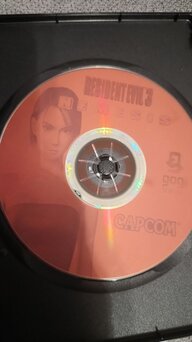
Looking ahead, the picture is inevitably complicated. As someone who grew up in the '90s, it's hard to accept that none of this is going to last forever. The emotional attachment we have to what we buy hits a wall when we realize how fragile the media actually is. Unfortunately, a lot of discs today don't even contain the full game; it's just a version 1.0 that needs an immediate update just to run. That's already a blow to preservation, because we can't fight against time. We can dream of leaving a full shelf behind for our kids, but the truth is discs aren't eternal. Unlike old cartridges, which had sturdy circuit boards, optical discs degrade, they rot, even when stored under the best conditions.

A disc rotted by time. (Source: Google)
That's why real preservation isn't tied to having the physical object in your hands, but to democratized digital access. And that's where the PC ends up being the savior. Xbox and PlayStation couldn't care less about this. Nintendo, being a Japanese company, still keeps one foot in physical media, but their game key cards aren't the definitive solution either. With Nintendo constantly shutting down digital storefronts (like what happened with the Wii, DS, 3DS, and Wii U), the game card risks becoming just a useless piece of plastic once the network infrastructure gets shut off.
Steam and GOG still offer a safer path. On PC, the environment is less locked down and lets you make real backups of your data. Even if you can't run a game today because of some protection system, the future always finds a way, whether through cracks or mods created by the community itself.
Gabe Newell (Steam's sole owner) has a policy that, so far, has held up well, but nothing guarantees the company's philosophy won't change, or that control won't be handed off someday. Nothing is 100% safe, but what you can do is secure your own copies and trust in the collective backup culture that exists on PC.
We need to accept that physical media running directly on the original console isn't a path to permanence. The future is about understanding that your collection needs to be yours, under your control, and the PC is, today, our one real tool of resistance against the erasure of gaming history.
As we wrap up this reflection, the issue goes way beyond video games. When you hit a certain age, it hits you: nothing in this life lasts forever, whether we're talking about the people we love or the things we accumulate. Maybe the greatest legacy we can leave for future generations is exactly the value of the things we build and preserve. Unfortunately, the current trend among big companies and governments is to push us toward a model where nobody owns anything, you just use it, discard it, and move on. A lot of people are growing up with zero prospect of ever owning a house, a car, or any physical asset, to the point of treating even a simple game as something that doesn't really belong to them.
The most dangerous part is that people are getting used to this apathy, like owning nothing is the new normal. Even if younger generations meet this with passivity, I think it's essential that we do our part and teach that yes, having your own things matters, and valuing what's yours is an act of resistance.
Don't let corporate silence dominate the conversation. Sony published the announcement about the end of physical media and then went almost two days without a word, waiting for the topic to cool down and disappear. That's their standard playbook. So the only weapon we really have is voting with our wallets. Don't hand your money to companies that are actively working to strip away your autonomy, whether in the gaming market, real estate, or car dealerships.
Don't accept this narrative that you don't need to own anything. Do your part, value what's yours, and fight so the next generation can live with the dignity and freedom we're still fighting to hold onto today.

Sony's 2013 E3 Press Conference (Source: Google)
The lesson from the past: the Xbox One disaster and Sony's current paradox
This whole controversy isn't exactly new, and if we look back, it's impossible not to remember the disaster that was the Xbox One launch in 2013. Back then, the head of the brand, Don Mattrick, announced that the new console would have a system where discs would be pretty much useless for resale or lending, since they'd be tied to a single account.
The market lost its mind over the idea, and the backlash was absurd. Things got even worse for Microsoft when Sony jumped into the fun with a video that became legendary. In it, Shuhei Yoshida and executive Adam Boyes mockingly taught people how to "share" physical games on the PS4: all Yoshida had to do was hand the disc to Boyes. It was a masterstroke that destroyed any chance Microsoft had of pulling off that strategy, forcing the company to walk back almost every restriction before the console even hit stores.
To top off the whole situation at the time, there was also that famous interview Don Mattrick gave to journalist Geoff Keighley, where he basically said that if someone didn't want to be online all the time, the solution was to just keep playing on the Xbox 360. That answer came across as incredibly elitist, completely out of touch with what players wanted, and it only helped bury the Xbox One's image even deeper.
Infamous Don Mattrick interview with a slightly younger Geoff Keighley. (Source: Google)
Now, thirteen years later, history comes full circle, but with Sony doing something far more radical. The timing doesn't seem like a coincidence, since all of this happened just one or two weeks after Rockstar confirmed that GTA 6 wouldn't have a physical version. With this announcement, Sony makes it clear that the end of physical media is being rolled out gradually, which makes it almost 100% certain that the PlayStation 6 probably won't even consider having a disc drive (with Microsoft's Project Helix following the same path). And the implications of this go way beyond the plastic case sitting on your shelf.
The empty shelf barrier and the illusion of digital ownership
The most immediate problem with this change is, to put it bluntly, the ban on having stuff on your shelf. For folks born from 2010 onward, this doesn't seem to make a difference, since that generation grew up in a fully digital world, where music, movies, and games are just files on the network. They don't feel the need to have a physical product at home. But for those of us from older generations, having that box (even if these days it doesn't even come with a printed manual) still carries huge emotional value. It's the joy of collecting, of seeing what you've achieved, physically, right there.
But beyond the sentimental side, there's the ownership issue. For a while now, Sony and the other giants have been slipping in those endless contracts nobody reads, making it clear that you don't own anything, you're just paying for a license to use something that they can revoke whenever they feel like it. It's bizarre to think that even when you click that big button that says "buy," you're really just renting the product indefinitely.
A physical game is still a real asset. Today, I can buy, sell, or trade titles from almost any generation of PlayStation or Xbox. Maybe in 20 years that'll change, but right now those discs have value: they're assets I can actually trade. And then there's the secondhand market, which is essential for the industry.
Not everyone can afford full price or wait around for digital store sales. A lot of people play on a tight budget, buying games from past generations, getting one as a gift from a cousin, or waiting for the hype to die down to snag a cheap used copy. That used-game market drives the majority of the player base.
What Sony and Microsoft are doing is basically wiping out that parallel economy to monopolize everything. After all, Sony owns the only possible store on PlayStation, and Microsoft does the same thing on Xbox. They want to control exactly how much you pay and how you consume. But there's a crucial difference between the two companies that we need to break down here.
Price difference between Gran Turismo 7's physical version on Amazon and the one and only store available inside the PS5. (Source: Amazon and Sony)
Not even touching the used market which is way lower.
Not even touching the used market which is way lower.
Market control: the strategic difference between Xbox and PlayStation
The difference between Xbox and PlayStation is a key point in this whole discussion. Let me say upfront: all of these issues are bad, but the two companies' ecosystems work in pretty different ways. Sony doesn't sell activation keys for its games; it limits itself to selling gift cards with fixed values that you're forced to spend inside their own store.
Microsoft, on the other hand, allows activation keys to be sold through external partners. That makes access a lot more democratic, since you can find a game that costs a hundred dollars in the official store for a much lower price somewhere else. In Sony's model, since the gift card is the only option, the price rarely changes, and at the end of the day, 100% of the money goes straight back to them.
This sets up a market monopoly that's already facing lawsuits in the United States and Europe. My hope is that, sometime in the not-too-distant future, these companies will be forced to allow third-party stores within their systems, giving players the real right to choose where they want to buy. I'm not naive enough to think that's going to change tomorrow, but it's crucial that the courts keep the pressure on and that people don't lose their outrage, because this corporate behavior is purely strategic.
PlayStation gift cards with fixed values (left) vs. Xbox game keys at lower prices on alternative stores (top right) and on Xbox Store (down left) (Sources: Amazon, G2A and Xbox Store).
We've reached this point because Sony has the hard data. They know physical sales have dropped a lot compared to digital. Sony said nearly 80% of full-game sales on PS4 and PS5 are already digital, up from 13% when the PS4 launched in 2013. They're looking at the behavior of the casual player, the one who just wants to buy their sports game or the hot new release on the day they get their console. That player doesn't want to wait for a disc to arrive in the mail; they want to swipe their card and start playing right away.
For that kind of player, convenience beats any debate about preservation or ownership. If that person could sell the disc afterward to buy another game, maybe they would, but the resale process is a hassle, and for a lot of people, it's just not worth the effort. The plain truth is that most players today have no real attachment to the physical product.
Younger generations grew up consuming content without needing a full shelf, and for them, the convenience of a digital file is all that matters. They want to use it, enjoy it, and when they get tired of it, just swap it for another title without looking back. The problem is that while we're debating the convenience of right now, we're ignoring what we're going to lose down the road: when the server shuts down and the game you paid full price for simply ceases to exist.
The illusion of permanence and the role of PC in preservation
Looking ahead, the picture is inevitably complicated. As someone who grew up in the '90s, it's hard to accept that none of this is going to last forever. The emotional attachment we have to what we buy hits a wall when we realize how fragile the media actually is. Unfortunately, a lot of discs today don't even contain the full game; it's just a version 1.0 that needs an immediate update just to run. That's already a blow to preservation, because we can't fight against time. We can dream of leaving a full shelf behind for our kids, but the truth is discs aren't eternal. Unlike old cartridges, which had sturdy circuit boards, optical discs degrade, they rot, even when stored under the best conditions.
A disc rotted by time. (Source: Google)
That's why real preservation isn't tied to having the physical object in your hands, but to democratized digital access. And that's where the PC ends up being the savior. Xbox and PlayStation couldn't care less about this. Nintendo, being a Japanese company, still keeps one foot in physical media, but their game key cards aren't the definitive solution either. With Nintendo constantly shutting down digital storefronts (like what happened with the Wii, DS, 3DS, and Wii U), the game card risks becoming just a useless piece of plastic once the network infrastructure gets shut off.
Steam and GOG still offer a safer path. On PC, the environment is less locked down and lets you make real backups of your data. Even if you can't run a game today because of some protection system, the future always finds a way, whether through cracks or mods created by the community itself.
Gabe Newell (Steam's sole owner) has a policy that, so far, has held up well, but nothing guarantees the company's philosophy won't change, or that control won't be handed off someday. Nothing is 100% safe, but what you can do is secure your own copies and trust in the collective backup culture that exists on PC.
We need to accept that physical media running directly on the original console isn't a path to permanence. The future is about understanding that your collection needs to be yours, under your control, and the PC is, today, our one real tool of resistance against the erasure of gaming history.
The future of our autonomy: why you shouldn't accept the throwaway narrative
As we wrap up this reflection, the issue goes way beyond video games. When you hit a certain age, it hits you: nothing in this life lasts forever, whether we're talking about the people we love or the things we accumulate. Maybe the greatest legacy we can leave for future generations is exactly the value of the things we build and preserve. Unfortunately, the current trend among big companies and governments is to push us toward a model where nobody owns anything, you just use it, discard it, and move on. A lot of people are growing up with zero prospect of ever owning a house, a car, or any physical asset, to the point of treating even a simple game as something that doesn't really belong to them.
The most dangerous part is that people are getting used to this apathy, like owning nothing is the new normal. Even if younger generations meet this with passivity, I think it's essential that we do our part and teach that yes, having your own things matters, and valuing what's yours is an act of resistance.
Don't let corporate silence dominate the conversation. Sony published the announcement about the end of physical media and then went almost two days without a word, waiting for the topic to cool down and disappear. That's their standard playbook. So the only weapon we really have is voting with our wallets. Don't hand your money to companies that are actively working to strip away your autonomy, whether in the gaming market, real estate, or car dealerships.
Don't accept this narrative that you don't need to own anything. Do your part, value what's yours, and fight so the next generation can live with the dignity and freedom we're still fighting to hold onto today.
Last edited: